Meta Title
The Effects of Thunderstorms on People, Wildlife, and the Environment | Complete Guide – weather.gov
Meta Description
Learn how thunderstorms can affect humans, animals and the environment. Discover how thunderstorms develop, how they affect the environment, human safety, climate, farming, and what to do when a storm approaches.
Focus Keyword
A thunderstorm’s impact on the human, wildlife, and environmental communities.
URL Slug
effects-of-thunderstorms-on-people-wildlife-and-environment
Related SEO Keywords
thunderstorms
effects of thunderstorms
thunderstorm safety
severe thunderstorms
thunder and lightning
weather hazards
lightning strikes
The impact of thunderstorms on the environment
climate change and thunderstorms
wildlife during thunderstorms
storm preparedness
flash floods
heavy rainfall
extreme weather
atmospheric science
storm damage
weather awareness
natural disasters
thunderstorm facts
lightning safety
Table of Contents
Introduction
What Are Thunderstorms?
How Thunderstorms Form
There are several types of thunderstorms.There are various kinds of thunderstorms.
Why Thunderstorms Matter
Thunderstorm Impacts to People
Health and Safety Risks
Economic Impact
Effects on Wildlife
Environmental benefits and challenges
Frequently Asked Questions
Conclusion
Introduction
Weather is one of the most amazing and strongest phenomena that can happen on Earth and thunderstorms are one of these. Thousands of thunderstorms form over the earth every day, producing heavy rain, lightning, thunder, strong winds, and sometimes hail or tornadoes. Many thunderstorms are brief in duration, but can cause serious harm to people, animals, natural resources, agriculture, and transportation.
Thunderstorms are a common occurrence for millions of people during their season. When severe thunderstorms have destructive winds, heavy lighting, flash flood, and/or large hail, the storms become dangerous. Knowledge of the impact thunderstorms can have on both human communities and the natural environment helps people prepare for dangerous weather and to understand the value of thunderstorms in the maintenance of the Earth’s climate and ecosystems.
Thunderstorms are not entirely harmful. They help to cool the atmosphere, to distribute rainfall, to replenish rivers and lakes, and even to provide nutrients to the soil via chemical reactions caused by lightning. Meanwhile, they can threaten lives, cause damage to homes, interfere with transportation and change the habitat of wildlife.
This guide discusses how thunderstorms impact the human population, flora and fauna, and the environment, and why thunderstorms are still a necessary component of the natural weather cycles of the earth.
What Are Thunderstorms?
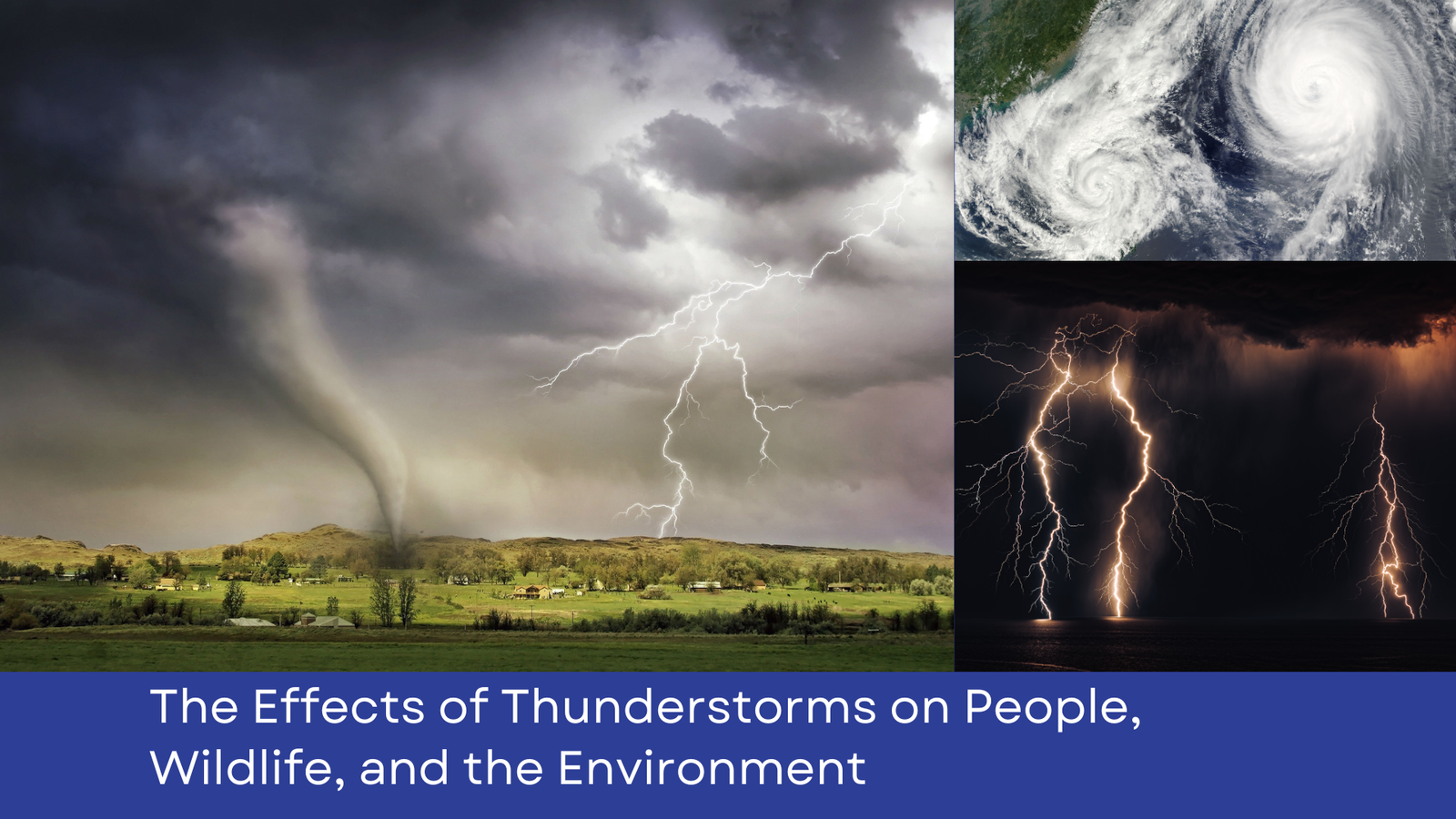
Thunderstorms are a weather phenomenon that occurs when warm, moist air is rising quickly into the atmosphere. This air cools and condenses to form tall cumulonimbus clouds as it ascends. These clouds contain water droplets and ice particles, which collide, leading to the formation of electrical charges and resulting in lightning.
The sound that we hear as thunder is due to the speedy expansion of heated air that is caused by the lightning.
Thunderstorms vary in strength, but most have some common characteristics:
Heavy rainfall
Thunder
Lightning
Strong wind gusts
Dark clouds
Sudden temperature changes
Hail, damaging straight-line winds, and tornadoes also are possible in some of the severe thunderstorms.
Storms happen on every continent except Antarctica and are most likely to occur in areas with warm temperatures and plenty of moisture.
How Thunderstorms Form
Three things are necessary for thunderstorms.
Warm Air
Warmer air near the surface of the earth is less dense than colder air, and starts to ascend into the atmosphere.
Moisture
Clouds are made by humidity, which is the water vapor. Thunderstorms tend to be intensified at higher moisture levels.
Atmospheric Instability
As warm air keeps rising through cooler layers of air, the cloud layers quickly develop into large storm systems.
Water droplets, ice crystals and hailstones are repeatedly colliding within the storm cloud.
In these collisions, certain electrical charges are released.
Eventually, the electrical imbalance is so great that lightening bolts are released between the clouds, or between the cloud and the ground.
For a split-second, the temperatures of the air burned by lightning are hotter than the surface of the sun.
This super-heated air expands quickly, creating thunder.
There are several types of thunderstorms.Thunderstorms come in a variety of forms.
The thunderstorms can differ markedly depending on weather conditions.
Single-Cell Thunderstorms
These storms are relatively small, and only last for 30 to 60 minutes.
They often bring heavy rain and lightning, but seldom become very violent.
Multi-Cell Thunderstorms
These storms are made up of a number of thunderstorm cells.
These tend to persist a great deal longer than single cell storms and may generate more intense precipitation, hail, and winds.
Squall Lines
A squall line is developed when many thunderstorms coalesce into a long line.
Often they generate extensive damaging winds and rain over a large area.
Supercell Thunderstorms
Supercells are the most powerful type of thunderstorm.
They have rotating updrafts (mesocyclones) and can produce:
Giant hail
Destructive winds
Intense lightning
Flash flooding
Tornadoes
Supercells are given special attention by meteorologists due to their strength.
Why Thunderstorms Matter
Thunderstorms have several effects on the Earth’s life.
They affect the atmospheric circulation and transport of heat and moisture.
Thunderstorms help to provide rain needed for agriculture, forests, wetlands, rivers, and fresh water supplies.
Lightning plays a role in the natural nitrogen cycle in that it enables nitrogen to be returned to the plants through the soil.
Many of the ecosystems would receive much less freshwater without thunderstorms.
Although dangerous, thunderstorms are an integral part of the climate system.
The impact of thunderstorms on people.The effects of thunderstorms on people.
Thunderstorms have a positive and negative impact on people.
Rainfall is involved in providing drinking water, irrigation water, and in growing crops.
Health and Safety Risks
Preparation and awareness are the keys to staying safe during a thunderstorm.
The most severe risks are:
Lightning strikes
Flash floods
Falling trees
Flying debris
Strong winds
Hail
Downed power lines
Weather agencies advise people to go to shelter as soon as they hear thunder.
As is the case with any public safety message, “When thunder roars, go indoors” is one of the most effective.
In buildings: Do not use corded electrical equipment, touch plumbing fixtures or stay near open windows until after the storm.
Providing protection from lightning is generally good when buildings are not available, for motor vehicles with enclosed metal tops.
The economic damage caused by thunderstorms.
For accurate information about thunderstorms, severe weather warnings, and safety precautions, readers can visit the National Weather Service for reliable weather guidance and safety information.
National and local economies are impacted in numerous ways by thunderstorms. Ordinary storms bring some rain, which is good for the crops and waterways; but heavy thunderstorms can cause billions of dollars in damages annually. Homes, businesses, roads, bridges and public facilities can be destroyed by strong winds, lightning, hail and flash flooding. It can take a long time and a lot of money for governments, insurance companies and impacted communities to rehabilitate from such disasters.
Temporary shutdowns of businesses also may occur during extreme weather. When electrical power is lost, manufacturing and retail activities, healthcare services and communication networks can be impacted. Airports, railways and highways can be a major impediment to the transportation of goods and cause delays to supply chains that impact industries beyond the storm’s path.
Effects of Thunderstorms on Wildlife
Wildlife relates closely to natural weather events such as thunderstorms. Many animals have developed various methods for coping with storms and are able to survive storms when conditions are difficult.
Changes in air pressure can be felt by birds long before weather changes are detected by human beings before storms. Many species cease flight activity, enter into dense vegetation or return to nests prior to a heavy rain.
Mammals are also responsive. Small animals and deer, foxes, bears all move towards protected areas like forests, caves or thick bushes. Pets such as dogs, cats, horse and cattle may become nervous when thunderstorms produce loud noises and strong flashes.
Forests and ecosystems are affected by thunderstorms :
Learn more about severe weather and its effects on communities.
Thunderstorms impact forests and ecosystems in many different ways.
Thunderstorms have both beneficial and detrimental impacts on forests.
The water provided by rainfall nourishes trees by replenishing water in the soil and providing water for photosynthesis. Regular precipitation is essential for healthy forests to maintain biodiversity and ecosystem balance.
Severe thunderstorms can also cause severe damage however.
Mature trees may topple over or large branches may be broken by strong winds, leading to gaps in the forest canopy. The damage may seem bad, but these holes can provide sunlight to younger plants growing under trees, stimulating new plant life.
If heavy rains occur, soil erosion can occur on steep slopes, transporting sediments into nearby rivers and streams. Sediment can be a problem if it is added to the water at an excessive rate, which can impact water quality and alter habitats for fish and other aquatic species.
Thunderstorms are critical to the Earth’s freshwater ecosystems.
Rain water fills up rivers, lakes, reservoirs, wetlands and underground aquifers used to create drinking water for millions of people.
In areas that have dry spells between rainy seasons seasonal thunderstorms are particularly significant.
But too much rain can cause major issues, though.
Pollutants in stormwater runoff can include oil, fertilizers, pesticides and trash that can impact water quality and aquatic life in rivers and lakes.
These impacts can be mitigated through well-designed drainage infrastructure, the preservation of wetlands and responsible urban design.
Thunderstorms have positive environmental impacts.
While thunderstorms are frequently known as a dangerous weather event, there are also a number of important environmental benefits provided by thunderstorms.
Replenishing Water Supplies
Thunderstorms replenish reservoirs, groundwater storage, rivers, and lakes the communities rely on all year long.
Supporting Plant Growth
Rain creates wet conditions that support forests, grasslands, crops and gardens.
Cooling the Atmosphere
The redistribution of heat through thunderstorms plays a role in regulating regional weather patterns.
Improving Air Quality
Dust, smoke, pollen and air pollutants are washed out of the air by rain and leave behind cleaner air after the rain.
Supporting the Nitrogen Cycle
The nitrogen is transformed into compounds after exposure to lightning in the atmosphere which will eventually reach the soil via rain. These nutrients are important for the growth of plants.
Do not come to any road which is filled with water as the depth may be impossible to assess and it may be slippery.
One of the best ways to prevent injuries and property damage during severe weather is to prepare.
The most common questions are listed under Frequently Asked Questions (FAQs).
1. What causes thunderstorms?
Thunderstorms are formed when the warm moist air moves upward into an unstable atmosphere. The warm moist air moves quickly upward into the unstable air to form a cumulonimbus cloud and bring precipitation, lightning, thunder and high winds.
2. What is the difference between a thunderstorm and a tornado?
No. While many thunderstorms are not severe, severe thunderstorms can bring damaging winds, large hail, flash floods and dangerous lightning.
3.What are the impacts of lightning on the environment?
In dry weather, lightning can start wild fires, damage trees and aid the natural nitrogen cycle by forming plant nutrients.
4.Thunderstorms impact wildlife in what way?
Though many animals find it advantageous to move to a safer place before storm events, extreme weather can have negative impacts on habitat, destruction of nests, and temporarily decrease the amount of food available.
5. Do thunderstorms help to improve air quality?
Yes. Rainfall can wash away dust, pollen, smoke and some air-borne pollutants and frequently leads to cleaner air, after the rain, as the pollutants are washed away.
6. Why is thunder heard after lightning is seen?
Light travels much faster than sound, so the flash of lightning reaches your eyes before the sound of thunder reaches your ears.
7. How to react during a thunderstorm.
In the meantime, stay inside, avoid open spaces, water, windows, and listen to local weather updates until the storm is over.
9. What is the most important role of the sun in agriculture?
Rainfall is critical to the growth of crops and soil moisture levels, but heavy rainfall can cause flooding, hail and high wind, which can harm crops.
10. How are thunderstorms related to climate change?
The warmer atmosphere can lead to more water being available in the atmosphere, and that can lead to heavier rainfall in some areas. The effects of climate change on thunderstorm patterns are still being studied.
11. What is the importance of thunderstorm to the environment?
They supply freshwater, control the climate, reduce air pollution and help maintain a healthy ecosystem and the cycling of nutrients.
Conclusion
Thunderstorms are one of the most dynamic and powerful weather phenomena of nature. They form shapes on the ground, fill the water supply, help keep the environment alive and are a crucial part of the climate on Earth. Meanwhile, severe thunderstorms can pose a life threat, damage property, disrupt transportation, and create a change in natural habitats through lightning, strong winds, hail, and flooding.
With advancements in weather forecasting and investing in resilience, society will be more prepared to face severe thunderstorms, and enjoy the benefits these storms provide to maintain life on land. When we know the dangers, we also become aware of the advantages of thunderstorms and they are not just spectacular examples of nature’s power in action but also important processes in healthy ecosystems and a balanced global environment.